

The Sustainable Fashion Prize
Recognised for doing it differentlyThe Sustainable Fashion award at the inaugural Africa International Design Awards is not given to brands that use recycled polyester in a tote bag and call it a day. It is given to projects where sustainability is the structural foundation of the work, not an afterthought added at the end of a production line. Savage Beauty Heritage qualified because there was no other way to build it.
Every decision in the collection, from material sourcing through to final construction, was made within the constraints of a circular model. The denim began as waste. The artisans are from the community the brand is embedded in. The process is designed to be repeatable and scalable, not a one-off art project. That is what the AIDA jury, comprising 41 judges from 18 nationalities, chose to recognise.
AfroWema also took home the Avant-Garde prize at the same ceremony. That story is told in a separate post. This one is about what it means to build a fashion collection on the principle that nothing goes to waste, and why that approach is now being held up as a model for the African fashion industry to follow.
Award Won
Sustainable Fashion
Savage Beauty Heritage
100%
Upcycled denim, sourced from waste
4
Named Kibera artisans
2
AIDA prizes, one collection
The Crisis This Collection Addresses
Nairobi's textile waste problemNairobi sits at the receiving end of the global fast fashion machine. Secondhand garments arrive by the tonne from Europe, the United States, and Asia through the mitumba trade. What cannot be sold does not disappear: it piles up at dumping sites on the edges of the city, contributing to soil contamination, blocked drainage, and a landscape of discarded clothing that stretches further every year.
The textile industry globally generates a disproportionate share of industrial waste. For cities like Nairobi, where dumping infrastructure is limited and regulation is inconsistently enforced, the consequences of that global problem land locally and visibly. The denim that became Savage Beauty Heritage came from those sites. It was not sourced from a certified mill or a pre-loved marketplace. It was identified at the point of disposal, at the end of the line, the material that the system had decided had no further value.
AfroWema's position is that this conclusion is wrong. The collection exists as a direct argument that the material has not lost its value. It has simply been abandoned by an industry that profits more from making something new than from recovering what already exists.
"Fashion has a real impact on our lives, well beyond appearances."
Afrique Magazine, on the AIDA Awards 2026The Research That Made It Possible
Mr. Green Africa and the Bestseller FoundationSavage Beauty Heritage did not begin in a studio. It began with a textile waste study conducted in Nairobi by Mr. Green Africa in partnership with the Bestseller Foundation. That study mapped where discarded denim was accumulating in the city, what condition it was in, and whether it could be recovered and repurposed at scale. The data it produced became the sourcing map for the collection.
Mr. Green Africa operates at the intersection of waste management and circular economy, building systems in Nairobi for recovering, sorting, and reprocessing material that would otherwise be lost. The Bestseller Foundation, the philanthropic arm of one of Europe's largest fashion groups, funds research and projects that address the industry's environmental footprint, particularly in regions most affected by the consequences of overproduction. Their collaboration on the Nairobi textile waste study brought rigour to what might otherwise have been an informal sourcing process, and made the AfroWema partnership possible.
The denim used in Savage Beauty Heritage was identified and sourced through a formal textile waste study, not informal collection. That distinction matters for traceability, for scalability, and for the credibility of the circular model the collection proposes.
What this partnership demonstrates is that the circular fashion model does not require brands to work alone. It requires building relationships across sectors: waste management, philanthropy, craft, and design, each contributing what the others cannot. Savage Beauty Heritage is the result of all four working together in Nairobi.
From Dumping Site to Finished Garment
The circular process, step by stepThe AIDA jury evaluated not just what the collection looks like but how it is built. The following is the process behind every piece in Savage Beauty Heritage, from the moment the denim is identified to the moment it is ready to be worn.
Identification
Discarded denim is located at Nairobi dumping sites through the textile waste mapping study conducted by Mr. Green Africa and the Bestseller Foundation. Material condition is assessed before collection.
Recovery and Cleaning
Recovered denim is cleaned and prepared for use. This stage extends the lifecycle of material that had reached the end of the conventional supply chain, recovering value the industry had discarded.
Deconstruction
Each piece of denim is carefully taken apart, preserving as much usable material as possible. The original character of the fabric, its fading, texture, and markings, is retained rather than erased. This is intentional. The history of the material is part of the finished garment.
Reconstruction by Hand
Artisans from Kibera, including Grace Swalah, Sophie Aol, Tabitha Oyugi, and Samwel Mwangi, reconstruct the denim into new garments using patchwork, hand-finishing, and integration with Kitenge panels. Each piece is made to maximise material use while minimising waste.
A One-of-a-Kind Garment
Because every piece of recovered denim carries a different history, no two garments in Savage Beauty Heritage are identical. The circular process does not produce uniformity. It produces singularity. Each garment is genuinely unrepeatable.
The Collection
Savage Beauty Heritage, as submitted to the juryThese photographs, credited to Daniel Kempf-Seifried, were submitted as part of AfroWema's official AIDA entry. They capture the texture and construction that defined the jury's decision: the visible history of the denim, the precision of the hand-finishing, and the contemporary silhouettes that emerged from material written off as waste.
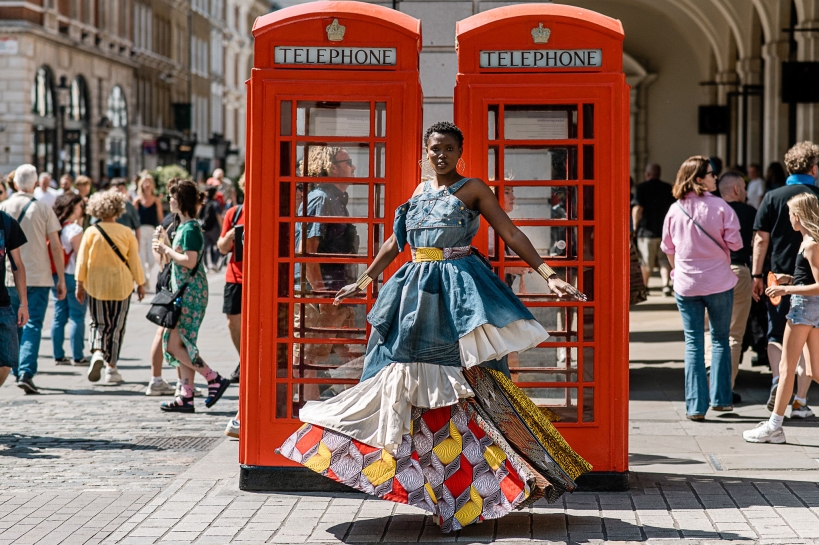
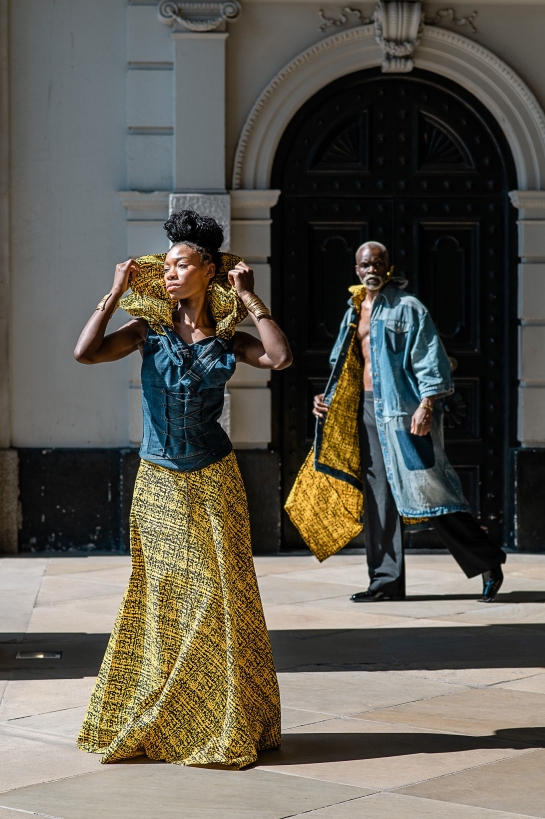
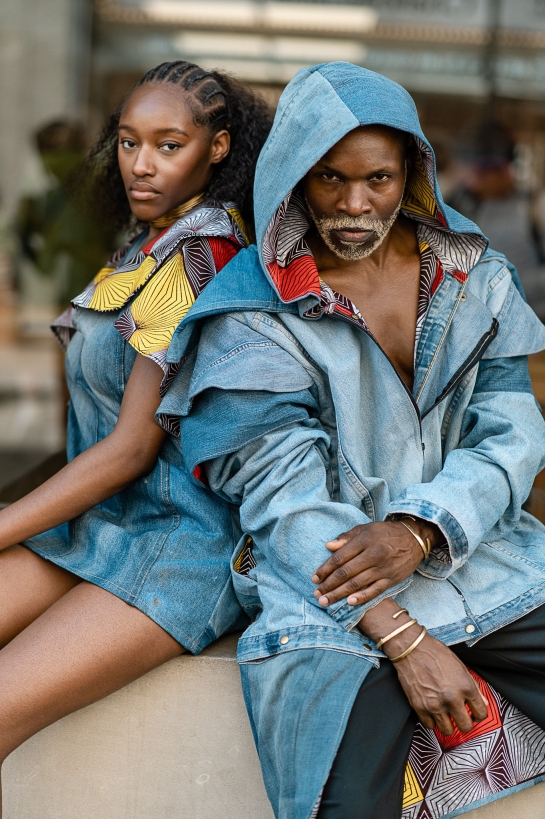
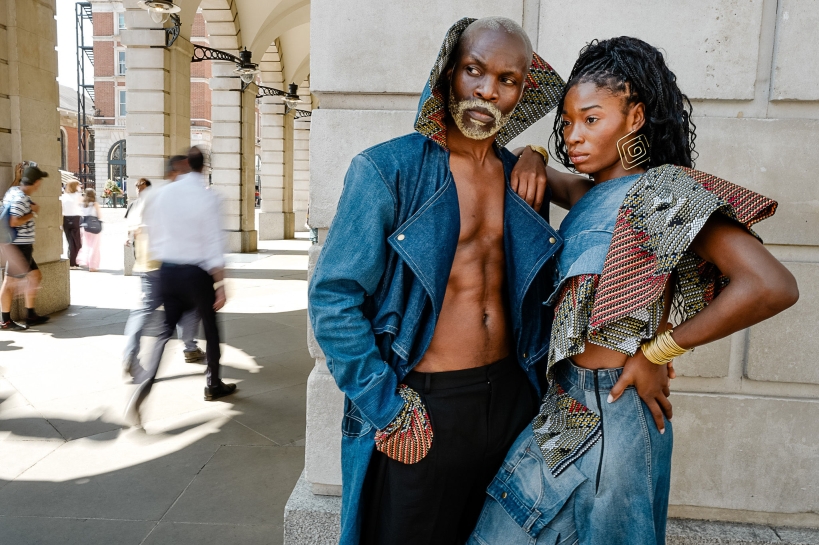
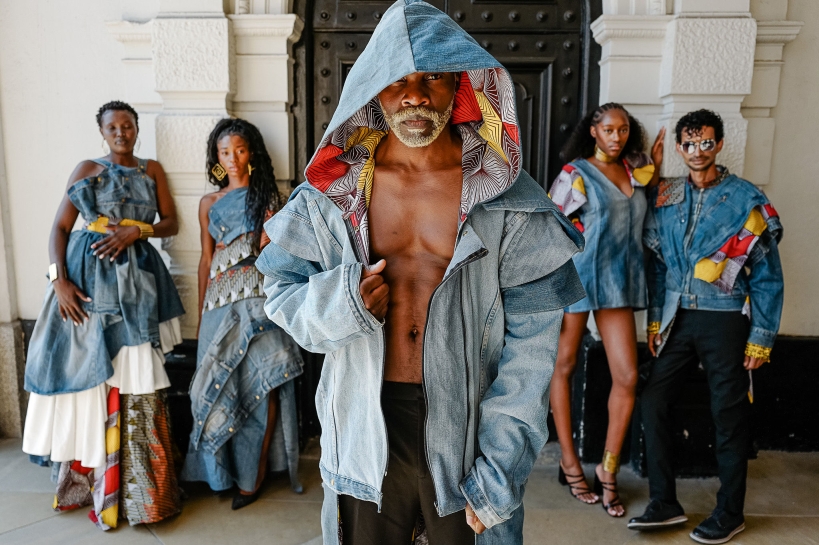
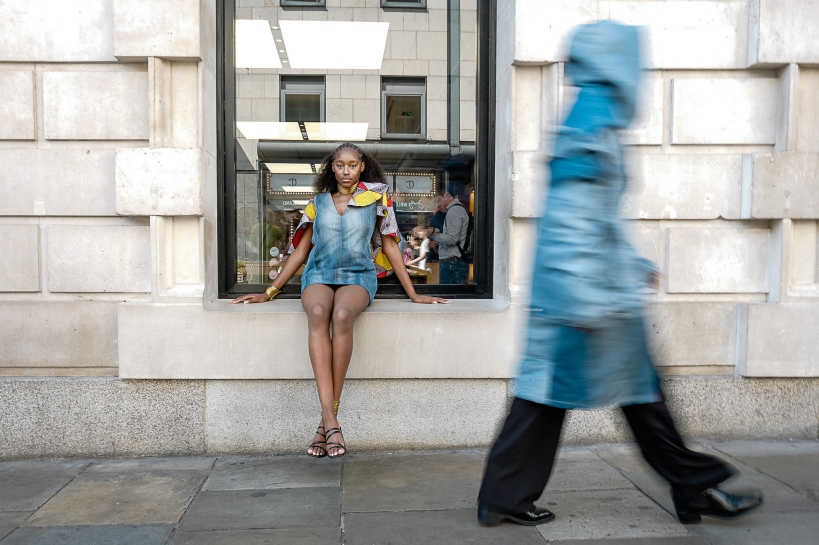
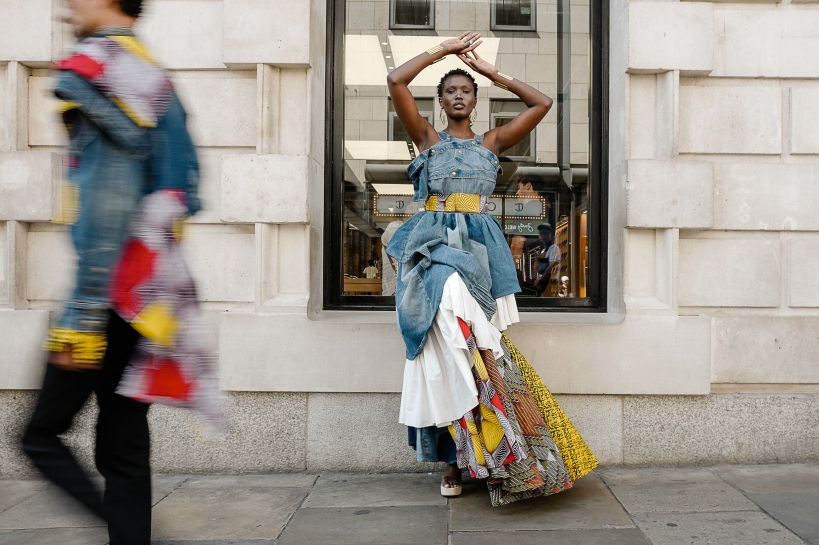
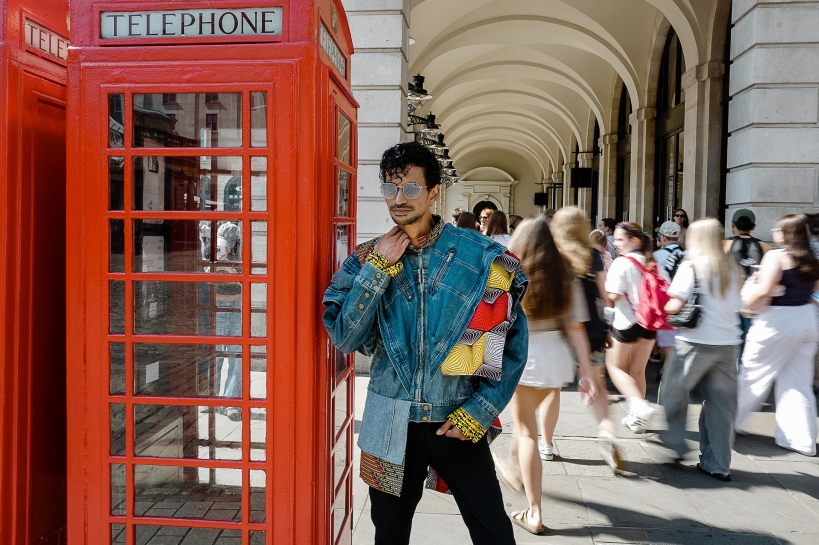
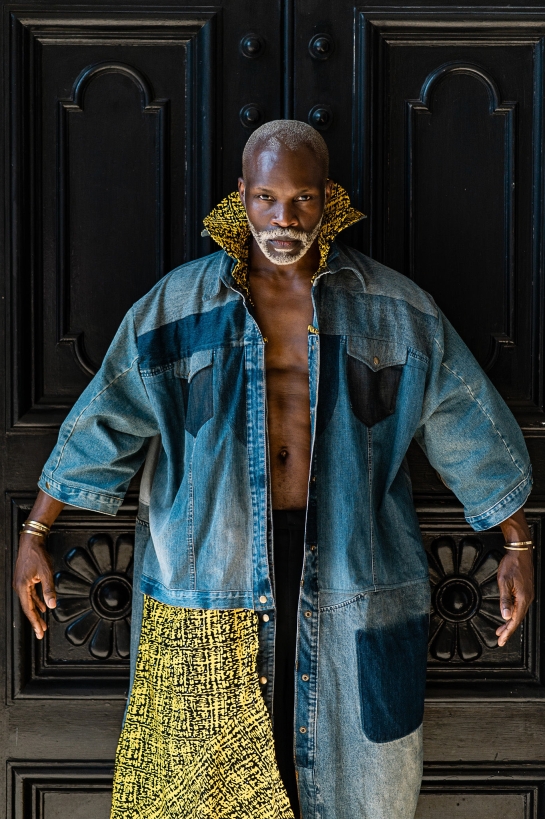
Photography: Daniel Kempf-Seifried
Three Dimensions of Sustainability
Environmental, craft, and communityThe AIDA judging criteria for Sustainable Fashion asked entrants to demonstrate sustainability across more than one dimension. A collection that reduces material waste but exploits its makers does not qualify. One that pays its artisans fairly but relies on virgin synthetics misses the point. Savage Beauty Heritage was built to meet all three.
Environmental
Denim sourced exclusively from Nairobi dumping sites. No new raw materials. Extended material lifecycle. Reduced environmental footprint at every production stage.
Craft and Quality
Small-scale production. Hand-finishing throughout. Garments designed for durability and repairability, not seasonal disposal. Each piece is built to last and to be worn.
Social
Fair income for artisans from Kibera. Skill development in circular fashion practices. A model that centres community benefit, not community extraction.
The AIDA submission describes what AfroWema has built as a scalable model: a framework for circular fashion that other brands, particularly across the African continent, could adopt and adapt. That framing matters. Winning a Sustainable Fashion prize for a one-off collection is one thing. Proposing a repeatable model is another. AfroWema is doing both.
The People Who Built It
Sustainability begins with who makes the clothesA sustainable fashion model is only as strong as its relationship with the people doing the work. For Savage Beauty Heritage, that relationship is not transactional. The artisans who constructed the collection are from the same community the brand is rooted in, and the process of making the collection is itself a contribution to that community's economic stability and creative identity.
The AIDA submission names every contributor. That act of naming, formally, in an international award entry, is not incidental. AfroWema lists its artisans because their work is the collection. Tatiana Teixeira leads the creative direction. Rosemary Ombeshi is part of the core design team. And four artisans from Kibera built each garment by hand.
Artisans, Kibera, Nairobi
Grace Swalah · Sophie Aol
Tabitha Oyugi · Samwel Mwangi
Lead Designer: Tatiana Teixeira · Design Team: Rosemary Ombeshi
Sustainability in fashion is often discussed in the abstract: carbon footprints, certifications, material sourcing audits. At AfroWema, it is discussed in terms of specific people in a specific place whose income, skills, and creative contribution are the foundation of every garment. Grace, Sophie, Tabitha, and Samwel are not a supply chain. They are the collection.
In Afrique Magazine
Issue 477, June 2026The AIDA Awards were published in full in Afrique Magazine's June 2026 edition, one of the most widely distributed pan-continental print publications covering African culture, business, and design. Savage Beauty Heritage appears on page 22, photographed alongside other award-winning projects in a feature dedicated to the inaugural ceremony.
The magazine's framing of the awards was explicit: fashion is not just visual culture, it is a social and environmental force. Its coverage of AfroWema sits within that argument rather than alongside it. For a brand that has always maintained this position, being recognised by a publication of Afrique's reach on those exact terms is a meaningful alignment.
The Announcement
Shared with our communityWhen the results were published, AfroWema shared the news directly with the community that has followed the brand's journey. The response to both awards was a reflection of how deeply the brand's sustainability story has resonated with an audience that chose to follow AfroWema precisely because of how the clothes are made.
A Model, Not Just a Moment
What the Sustainable Fashion prize signalsFashion awards are frequently given to beautiful things. The Sustainable Fashion category at the AIDA Awards was designed to go further than that: to identify projects that propose an alternative way of working, not just an alternative aesthetic. AfroWema's recognition in that category is a signal that the model the brand has been building in Kibera, sourcing from waste, partnering with community artisans, documenting every stage, is considered credible and replicable at a continental scale.
That distinction has practical implications. It affects who wants to collaborate with AfroWema, which stockists and buyers feel confident placing the brand, and which fabric and material partners see strategic value in the relationship. An award from a jury of 41 judges across 18 nationalities, including some of the most influential figures in African fashion investment, carries weight in those conversations.
The longer ambition is unchanged. AfroWema is building toward a hub in Kibera that trains, employs, and elevates the community that makes the garments possible. Every award, every runway, every page of press is a step toward making that hub real. The Sustainable Fashion prize at AIDA 2026 is one of the most significant of those steps taken yet.
First Award
Savage Beauty Heritage wins Avant-Garde
The same collection, the same ceremony, a second prize. The Avant-Garde recognition tells the story of the jury, the magazine feature, and what it means to build a collection that refuses to follow the rules of its industry. Read that post here.
Rescued from waste. Built to last a lifetime.
Savage Beauty Heritage is available to shop. Every piece is one of a kind, made by hand in Kibera, and recognised by the Africa International Design Awards as a leader in Sustainable Fashion.