

A Double Recognition
AfroWema named Avant-GardeAfrique Magazine has named AfroWema among the winners of the very first Africa International Design Awards (AIDA), with the Savage Beauty Heritage collection taking home not one but two prizes. The collection was recognised in the Fashion Design category under both Avant-Garde and Sustainable Fashion: two separate awards, judged on different criteria, both awarded to the same work born in Kibera, Nairobi.
This post focuses on the Avant-Garde prize, exploring what the award recognises, who made the collection, and why the jury singled it out. The Sustainable Fashion prize carries its own story and its own post, coming shortly.
The inaugural AIDA jury brought together 41 judges from 18 nationalities, including designer Selly Raby Kane, Africa Fashion Foundation founder Roberta Annan, and designer Bibi Seck. Together, they evaluated more than 300 projects across four major categories: Spatial, Product, Fashion, and Communication. That a collection made from rescued dumping-site denim by community artisans in Kibera walked away with two of those awards is a result worth sitting with.
Fashion Design Award
Avant-Garde
Savage Beauty Heritage
Fashion Design Award
Sustainable Fashion
Savage Beauty Heritage
Africa International Design Awards · Fashion Category · Winner 2026
View the Official AIDA Winner Profile →41
Judges, 18 nationalities
300+
Projects evaluated
22
Fashion sub-category awards
On the Pages of Afrique
Issue 477, June 2026, page 22AfroWema's appearance in Afrique Magazine marks the first time the brand has been featured in a pan-continental print publication of this reach. The June 2026 edition, dedicated in part to the inaugural AIDA Awards, spotlights Savage Beauty Heritage alongside some of the continent's most respected emerging design names. AfroWema appears in photo position number two, its garments photographed by Daniel Kempf-Seifried alongside pieces from Lohije, Cape Cobra, Kente Gentleman, World Shoe Inc., and Baazz.
The magazine framed the awards around a clear thesis: that design on the African continent has moved well beyond aesthetics and into genuine social impact. The judging panel evaluated submissions not just on visual execution but on cultural resonance, durability, social impact, and innovation. For AfroWema, whose entire model is built on those exact principles, the Avant-Garde prize lands as both an external validation and a directional confirmation.
"The submissions remind us that fashion has a real impact on our lives, well beyond appearances."
Afrique Magazine, on the AIDA Awards 2026In Good Company
The brands alongside AfroWemaThe magazine described Savage Beauty Heritage as a patchwork collection made from recycled denim, placing AfroWema in a striking group of African design talent for this inaugural edition. Among the other winners featured: Lohije, the Nigerian label blending denim offcuts with traditional diakwu and sakala fabrics; Cape Cobra, Justine Schafer's accessories line inspired by the Karoo; and Kente Gentleman, Aristide Loua's handwoven Sika costume from Senufo cloth. Good company for a brand born in Kibera.
The feature's editorial framing is worth noting. Rather than treating this as a style roundup, Afrique Magazine positioned the AIDA Awards as a statement about where African design is heading: away from imitation of European luxury, toward something rooted, intentional, and accountable. AfroWema has operated from exactly that premise since day one.
Judged by the Best
A jury built for substance, not spectacleWhat sets the AIDA Awards apart from a typical fashion accolade is the calibre and breadth of the people doing the judging. The panel was not assembled from critics and editors alone. It included practitioners who have spent careers building the very infrastructure of African design: Selly Raby Kane, the Senegalese designer known for pushing the boundaries of Afrofuturist fashion; Roberta Annan, founder of the Africa Fashion Foundation and one of the continent's most influential voices in fashion investment; and Bibi Seck, the Senegalese-American designer whose product work spans furniture, transport, and architecture.
Forty-one judges. Eighteen nationalities. A single mandate: find the projects across the continent that are not simply beautiful, but meaningful. For a panel like that to single out Savage Beauty Heritage from more than 300 submissions is a statement about where AfroWema now sits in the broader conversation about African design.
The fashion category alone carried 22 sub-category awards, a number that speaks to how seriously the inaugural edition treated the discipline. Rather than crowning a single winner, the AIDA jury chose to recognise the many different ways fashion can matter: through innovation, through cultural depth, through durability, and through the social weight a garment carries once it leaves the studio.
The Collection on the AIDA Stage
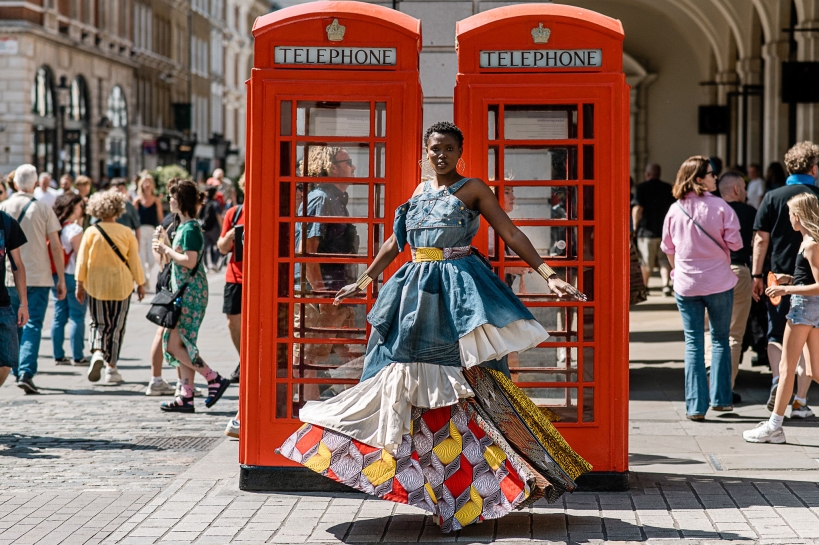
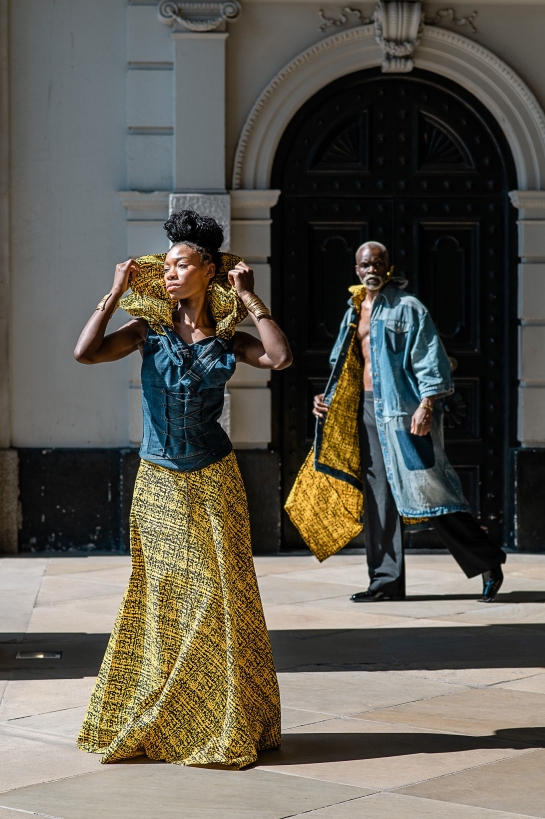
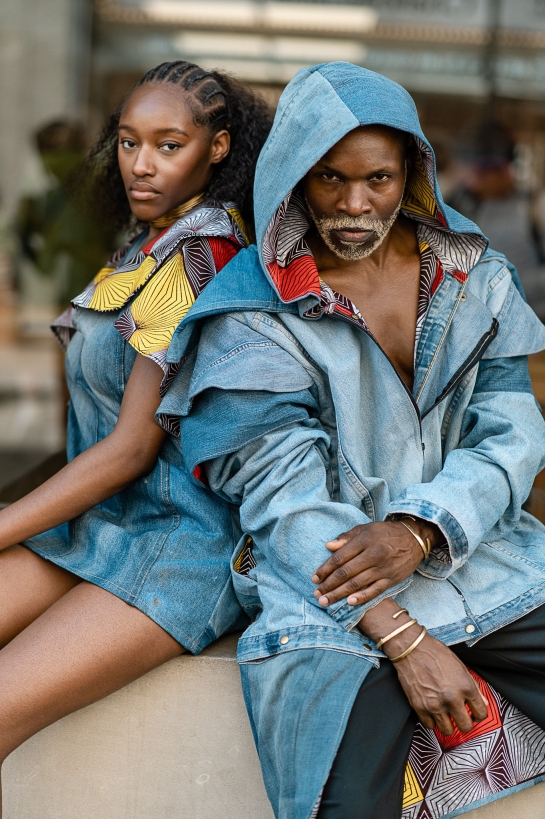
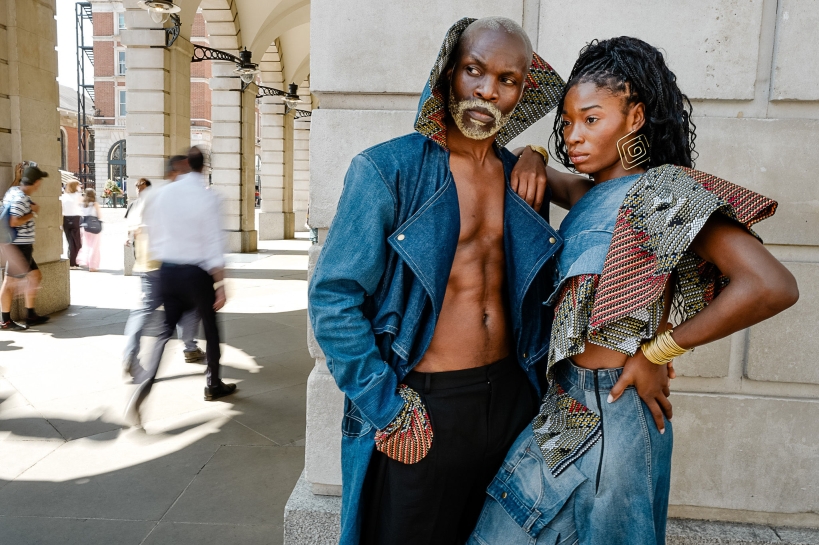
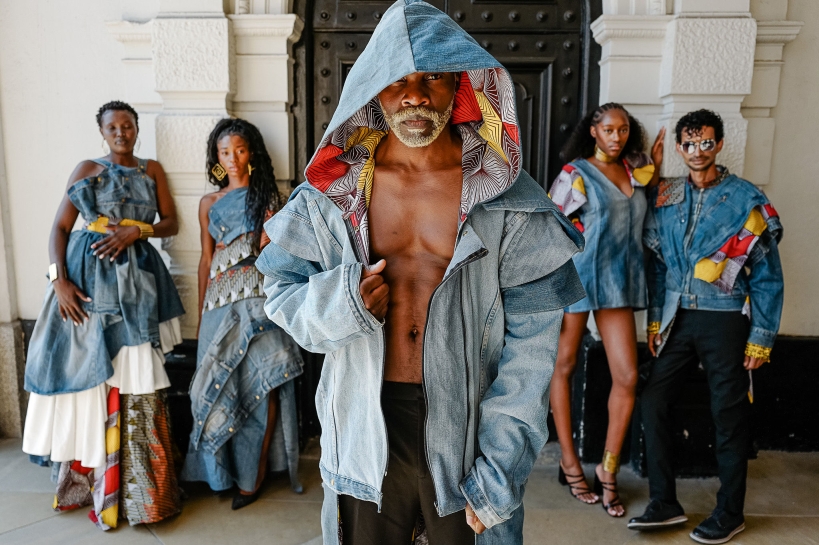
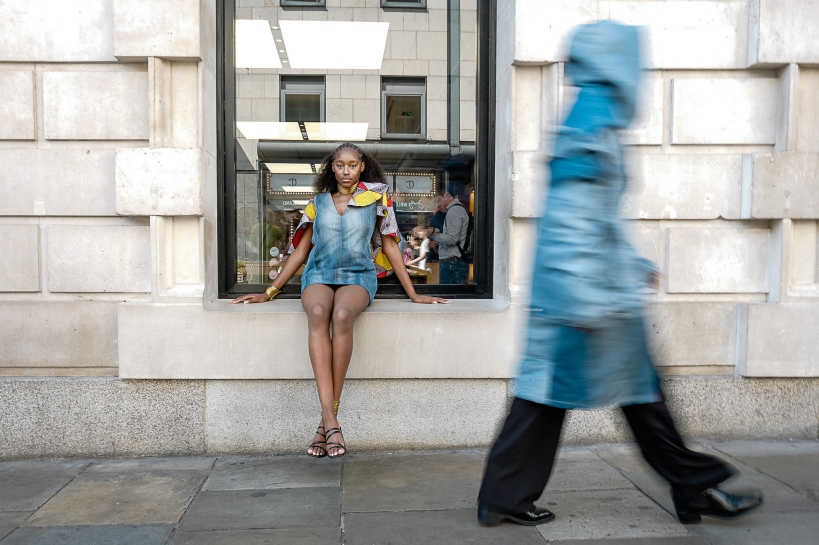
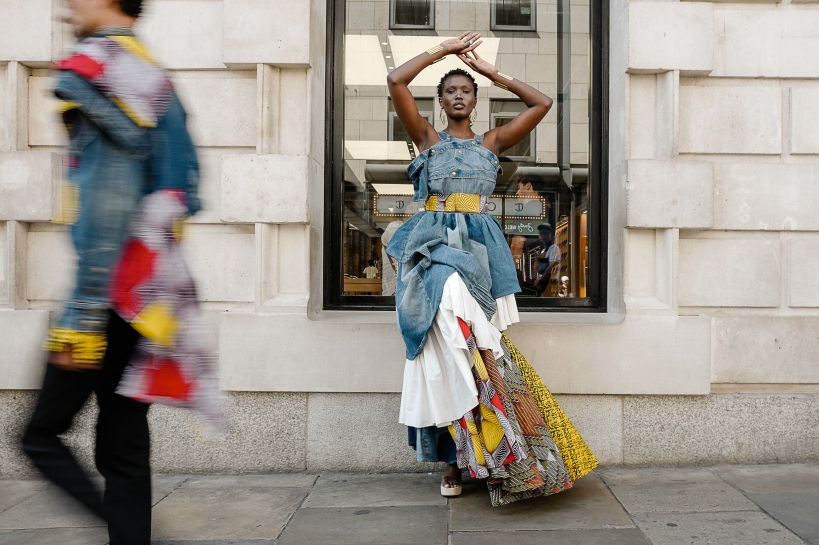
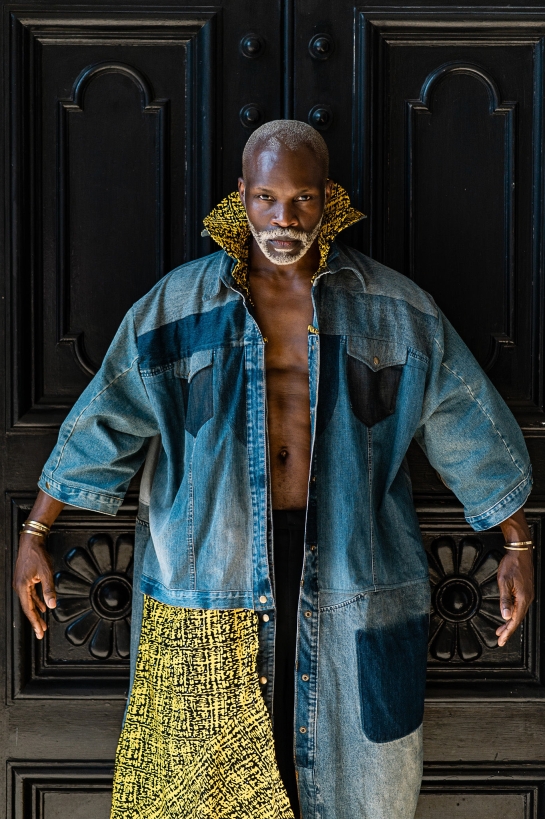
As submitted to the juryThese are the images submitted to the Africa International Design Awards alongside AfroWema's project documentation. Each photograph captures the quality of reconstruction that defines Savage Beauty Heritage: the raw character of the original denim still visible in every seam, combined with the precision of handcrafted tailoring from Kibera.

Photography: Daniel Kempf-Seifried
Why Savage Beauty Won
Designed to mean somethingSavage Beauty Heritage was never built to chase trends. The collection begins with discarded denim recovered from Nairobi's dumping sites, identified through a textile waste study conducted by Mr. Green Africa in partnership with the Bestseller Foundation. That denim is then carefully cleaned, deconstructed, and reconstructed by hand into garments that carry the visible history of their material: the original character of the fabric deliberately preserved in the final piece, not erased or hidden.
Each garment integrates upcycled denim with Kitenge panels and handcrafted techniques, using patchwork and hand-finishing to create contemporary silhouettes from fragments that would otherwise have contributed to environmental pollution. The collection extends the lifecycle of material written off by the industry, and then elevates it into something that commands attention on a European runway.
That is precisely what the AIDA jury was built to reward: not just craft, but the resonance behind it. A collection's right to win an Avant-Garde prize is earned by proving that the old idea of luxury, defined by excess and newness, can be replaced by something built on intention, transparency, and genuine care for the people who make the clothes and the places those clothes come from.
There is also a quieter reason this collection resonates with juries and audiences alike. Each garment in Savage Beauty Heritage is genuinely one of a kind. Because the denim is upcycled from dumping sites and every piece of fabric carries its own history, no two garments are identical. That is not a constraint of the process. It is the entire point. In an industry built on mass production and disposability, a collection that can never be exactly replicated is its own quiet act of rebellion.
This recognition arrives in the same season Savage Beauty Heritage walked two runways at Circular Sustainable Fashion Week Madrid. From London, to Madrid, to the pages of Afrique Magazine, the collection continues to prove what is possible when fashion is made differently from the very first stitch.
The People Behind the Collection
Names the award belongs toAwards go to brands. The work belongs to people. Savage Beauty Heritage was built by a team that extends well beyond a single creative vision, and the AIDA submission documents every contributor by name. They deserve to be named here too.
Founder & Lead Designer
Tatiana Teixeira
Creative direction, collection concept, and the vision behind Savage Beauty Heritage. Tatiana built AfroWema to prove that luxury and ethics are not in conflict.
Design Team
Rosemary Ombeshi
Part of the core design team that brought the Savage Beauty Heritage collection from concept to completed garments ready for the AIDA submission and international runways.
Artisans, Kibera, Nairobi
Grace Swalah · Sophie Aol
Tabitha Oyugi · Samwel Mwangi
The hands that made every seam.
Grace, Sophie, Tabitha, and Samwel are the artisans from Kibera whose hands built the collection. Their craftsmanship, the patchwork, the hand-finishing, the reconstruction of discarded denim into garments with new lives, is the technical foundation on which every piece of recognition AfroWema receives is built. The Avant-Garde prize belongs to them as much as it belongs to the brand.
What This Means Going Forward
A milestone, not a finish lineAn award like this carries weight beyond the moment it is announced. For AfroWema, the Avant-Garde recognition is a signal to the wider industry: to future collaborators, to fabric partners, to the buyers and stockists who decide which brands get shelf space, that what is happening in Kibera deserves serious attention. It is the kind of validation that opens doors a marketing budget cannot.
It also reinforces something Tatiana has said in nearly every interview AfroWema has given this year: the goal has never been to make a single beautiful collection. The goal is to build an ecosystem, a hub in Kibera that trains, employs, and elevates the community that makes these garments possible. Every award, every runway, every page of press coverage is a step toward making that hub a reality.
Savage Beauty Heritage will continue to travel. But its win at the AIDA Awards belongs first to Grace, Sophie, Tabitha, and Samwel, and to everyone in Kibera whose skills and stories are woven into the fabric of the collection. The recognition is theirs as much as it is the brand's.
Worn with pride. Recognised with honour.
The collection that won Avant-Garde at the AIDA Awards is available to shop. Each piece is one of a kind, handcrafted in Kibera, and built to be worn for life.